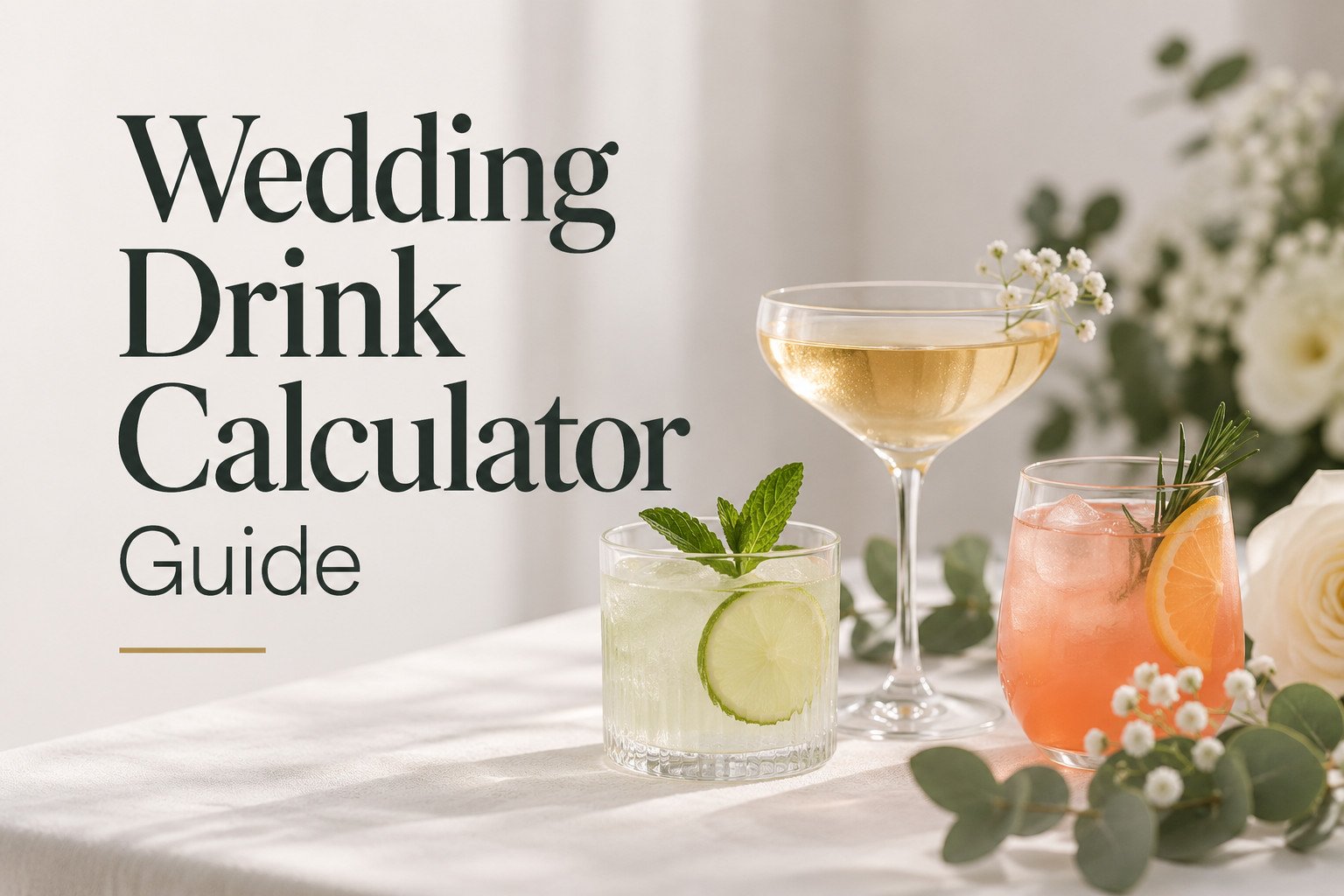
Wedding Drink Calculator Guide: Beer, Wine & Liquor Estimates
One of the hardest wedding quantities to estimate is drinks. You need enough to keep guests comfortable, but buying far too much can waste a meaningful part of the budget.
A wedding drink calculator helps by turning a few inputs—guest count, drinking percentage, reception length, and bar style—into a practical estimate for beer, wine, liquor, mixers, water, and alcohol-free options.
How a Wedding Drink Calculator Works
The calculator does not predict exactly what every guest will drink. Instead, it creates a planning estimate from the variables that matter most.
- total guest count
- percentage of guests likely to drink alcohol
- reception duration
- beer, wine, and spirit mix
- non-alcoholic beverage needs
You can try the free Wedding Beverage Calculator and adjust the inputs until the estimate matches your event.
Step 1: Start With Guest Count
Suppose your wedding has 150 guests. Do not automatically calculate alcohol for all 150.
Some guests may be children, designated drivers, non-drinkers, or people who simply prefer alcohol-free drinks. If you estimate that 70% of your guests will drink alcohol:
150 × 70% = 105 drinking guests
This gives you a much more realistic base than assuming every person will drink.
Step 2: Add the Reception Length
A three-hour reception and a seven-hour reception will not need the same amount of alcohol. Longer receptions usually mean more total servings.
A common planning estimate is around one drink per drinking guest per hour, but it should be treated as a starting point rather than a guarantee.
For a more detailed explanation, read How Much Alcohol Do You Need for a Wedding?.
Step 3: Choose Your Bar Style
Different weddings need different drink mixes.
Balanced bar
A mixture of beer, wine, and spirits. This works well when your guest preferences are mixed or unclear.
Wine-forward
More wine and less beer or liquor. This can work well for dinner-focused receptions.
Beer-forward
A larger share of beer, cider, or hard seltzer. This is often simpler to serve and easier to count.
Cocktail-forward
More spirits and mixers. This option requires more planning because every cocktail needs both alcohol and non-alcoholic ingredients.
Beer and wine only
A simpler bar that can reduce cost and complexity while still giving guests variety.
Step 4: Estimate Wine Bottles
A standard bottle of wine provides roughly five servings, depending on pour size.
If your plan calls for 150 wine servings:
150 ÷ 5 = approximately 30 bottles
Add a modest buffer if appropriate, especially if you know wine is popular with your guests.
Step 5: Estimate Beer and Cider
Beer is straightforward because it is usually counted as individual bottles or cans.
If your plan calls for 180 beer servings, you need approximately 180 bottles or cans before adding a small safety margin.
If you are serving cider or hard seltzer too, decide whether those are part of the beer allocation or a separate category.
Step 6: Estimate Liquor and Mixers
Cocktails require both spirits and mixers, which is why a cocktail-heavy bar can become complicated quickly.
Common spirits include vodka, gin, rum, whiskey, and tequila. Mixers may include tonic, soda, cola, ginger beer, juice, and sparkling water.
Instead of trying to stock every possible drink, choose a limited menu and buy around those recipes. Two signature cocktails plus a few simple mixed drinks are much easier to estimate than a full open-ended bar.
Step 7: Plan Water and Zero-Proof Drinks
Water should never be an afterthought. Make it easy to access throughout the reception, especially for outdoor weddings, warm weather, and dance-heavy events.
Offer alcohol-free choices that feel intentional rather than secondary:
- sparkling water
- mocktails
- alcohol-free beer
- lemonade
- iced tea
- fruit-infused water
- soft drinks and juice
Example: Drink Estimate for 100 Guests
Imagine 100 total guests, 75 of whom are likely to drink alcohol, at a five-hour reception.
Using a rough starting estimate of one drink per drinking guest per hour:
75 × 5 = 375 alcoholic servings
You could then divide those 375 servings based on the bar style. A hypothetical balanced mix might allocate a portion to beer, a portion to wine, and a portion to spirits.
The exact mix should reflect your guests. A wine-loving crowd should not use the same allocation as a beer-heavy group.
Common Wedding Drink Planning Mistakes
- Counting every guest as an alcohol drinker.
- Ignoring the length of the reception.
- Buying equal quantities of every spirit.
- Forgetting mixers, water, ice, and zero-proof drinks.
- Failing to check venue corkage rules.
- Buying a huge buffer without checking return policies.
How Drinks Affect the Wedding Budget
The drink plan should connect to your overall wedding budget. A full bar may require more spirits, mixers, ice, glassware, and staffing than beer and wine only.
Once you have an estimated quantity, use the Wedding Budget Calculator to see how the bar fits into the rest of your spending.
Frequently Asked Questions
What information do I need for a wedding drink calculator?
Start with guest count, estimated drinking percentage, reception length, and the type of bar you plan to serve.
How many wine servings are in one bottle?
A standard bottle usually provides around five servings, depending on pour size.
Should I add extra drinks as a buffer?
A modest buffer can be useful, but avoid overbuying blindly. Check whether unopened products can be returned and what your venue or caterer already provides.
Does the calculator include non-alcoholic drinks?
The VowVirtue Wedding Beverage Calculator also helps estimate water, mixers, soft drinks, and zero-proof options so the plan is not focused only on alcohol.
Use the Calculator Instead of Guessing
Enter your wedding details into the free Wedding Beverage Calculator to get a practical starting estimate. Then adjust the result around your guests, venue rules, and actual bar menu.